
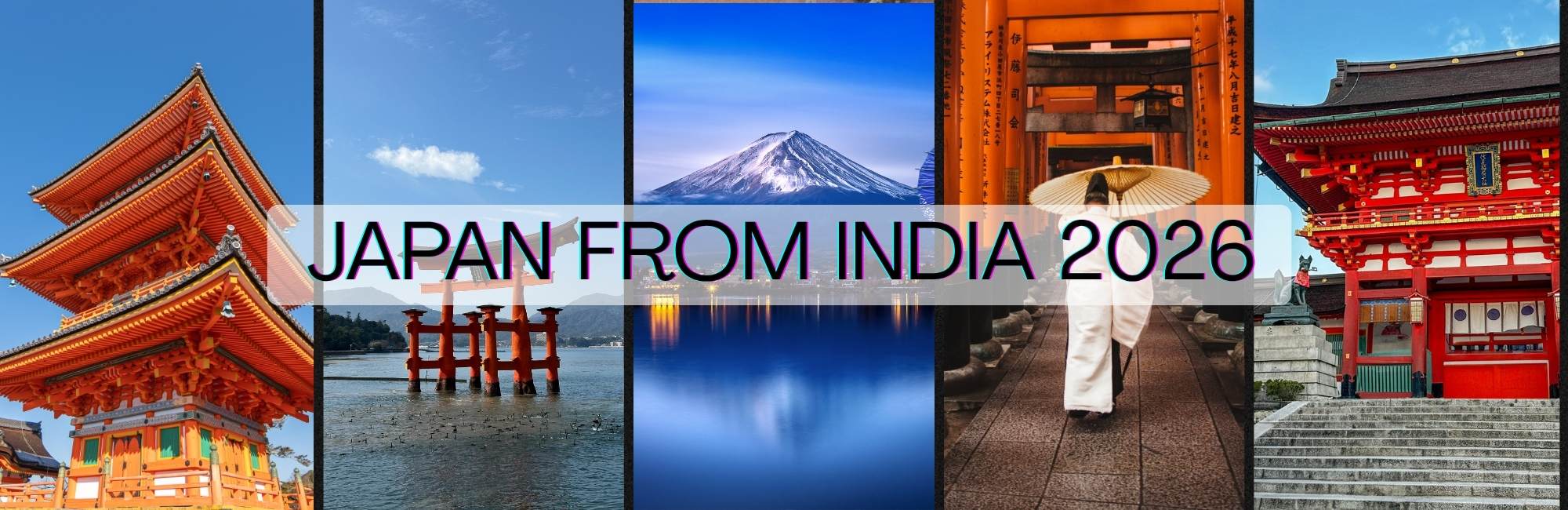
Japan wasn’t on most Indian travelers’ radars until recently. Thailand dominated Southeast Asia. Dubai captured Middle Eastern attention. Europe remained the aspirational Western destination. But something shifted around 2023-2024. Suddenly, Japan started appearing in conversations—not just among backpackers, but families planning vacations, corporate teams organizing retreats, and couples researching honeymoon destinations.
The numbers tell the story plainly. Indian searches for Japan trips surged 68% between May and August 2025 alone, with Tokyo, Osaka, and Kyoto leading growth. This isn’t a temporary spike. It’s a fundamental shift in how Indians view international travel—moving beyond familiar comfort zones toward genuinely different cultural experiences.Screenshot-2025-11-12-at-09.04.07.jpg
Japan offers what few destinations can: ultra-modern cities alongside ancient traditions, impeccable service standards, safety that feels almost surreal, and landscapes ranging from volcanic mountains to subtropical islands. For Indians accustomed to chaos, Japan’s orderliness feels both exotic and oddly relaxing.
Why Japan is Trending Among Indian Travelers
Several factors converged to make Japan suddenly appealing. The weakening yen made previously expensive Japan more accessible. Post-pandemic revenge travel shifted preferences toward unique destinations. Social media flooded feeds with cherry blossom visuals and neon-lit Tokyo streets. And crucially, Japan started feeling achievable rather than impossibly distant.
But there’s something deeper happening. Indian travelers matured beyond checkbox tourism. They’re seeking experiences that challenge assumptions, cultures fundamentally different from their own, places that deliver stories rather than just photographs. Japan satisfies that hunger completely.
The country operates on principles often opposite to India. Punctuality isn’t aspirational—it’s absolute. Silence in public spaces is enforced culturally, not legally. Service standards border on excessive. Streets remain spotless without visible enforcement. For Indians navigating familiar South Asian chaos, Japan represents controlled perfection—fascinating, sometimes intimidating, ultimately transformative.Important 2026 Update: Japan plans its first visa fee increase since 1978, taking effect fiscal year 2026. Current single-entry visas cost ₹1,728 (¥3,000) and multiple-entry ₹3,457 (¥6,000). New rates will align with Western standards—potentially ₹8,000-13,000 range. Additionally, departure tax (currently ₹575) may increase. Plan early to potentially lock in current rates.
Tokyo: Where Future Meets Tradition
The City That Never Stops Evolving
Tokyo operates at a pace that makes Mumbai feel leisurely. Approximately 14 million people navigate this metropolitan area daily, yet systems function with machine-like precision. Trains arrive within 30-second windows. Pedestrians obey crossing signals even without traffic. The city hums constantly but never feels chaotic.
Shibuya Crossing deserves the hype—not for Instagram moments but for what it represents. Watch from the Starbucks second floor as 3,000 people cross simultaneously during peak hours. They navigate without collisions, following unspoken rules, creating ordered chaos. It’s mesmerizing precisely because it shouldn’t work but does flawlessly.
Shinjuku presents Tokyo’s multiple personalities compressed into one ward. By day, it’s business district—salarymen in identical dark suits, convenience stores on every corner, underground malls that become cities unto themselves. By night, Kabukicho’s red-light district illuminates, Golden Gai’s narrow alleys fill with tiny bars seating four people maximum, and Robot Restaurant (touristy but entertaining) performs sensory-overload shows.
Asakusa preserves older Tokyo. Sensō-ji Temple, Tokyo’s oldest, dates to 628 AD. The Nakamise shopping street leading to it sells traditional snacks, crafts, and souvenirs—touristy yes, but genuinely connected to Tokyo’s merchant history. Early mornings here, before crowds arrive, offer glimpses of local worship practices.
Harajuku and Omotesando contrast sharply. Harajuku’s Takeshita Street explodes with youth fashion culture—kawaii aesthetics, crepe stands, trendy shops catering to teenagers. Walk 10 minutes to Omotesando’s tree-lined avenue, and suddenly you’re among luxury boutiques and architectural showcases. This juxtaposition—teen chaos adjacent to refined elegance—defines Tokyo perfectly.
Best Duration in Tokyo: 3-4 days
Budget: ₹8,000-12,000/day (mid-range including hotels, meals, transport, activities)
Kyoto: Stepping Into Japan’s Soul
Ancient Capital, Timeless Traditions
Kyoto served as Japan’s imperial capital for over 1,000 years. That history didn’t disappear when the capital moved to Tokyo in 1868—it simply preserved itself. The city now hosts 17 UNESCO World Heritage Sites, over 2,000 temples and shrines, and traditions maintained across generations.
Fushimi Inari Taisha became Instagram-famous for its 10,000 vermillion torii gates creating tunnels up Mount Inari. Yes, it’s crowded. Yes, everyone photographs the same perspectives. But hiking past the first shrine where most tourists stop reveals something different. Secondary trails lead to smaller shrines. Foxes (Inari’s messengers) appear as stone statues throughout. The experience shifts from tourism to something approaching pilgrimage.
Kinkaku-ji (Golden Pavilion) literally covers its top two floors in gold leaf. It shouldn’t work—excess rarely does. But positioned beside a reflecting pond, surrounded by carefully designed gardens, the pavilion creates beauty through precision rather than modesty. Visit early morning when crowds thin and light hits the gold at sharper angles.
Arashiyama Bamboo Grove delivers on bamboo forest promises—towering stalks creating green canopies, light filtering through in beams, paths that curve gently through groves. The surrounding Arashiyama district matters equally: Tenryū-ji temple gardens, Iwatayama Monkey Park (actual wild monkeys), and small restaurants serving kaiseki (traditional multi-course meals).
Gion District preserves geisha culture, though spotting genuine geiko or maiko (Kyoto terms for geisha and apprentice geisha) requires luck and timing. Evening walks through Hanami-koji and Ponto-cho alleys reveal traditional wooden machiya houses, teahouses, and occasional glimpses of kimono-clad figures hurrying to appointments. Most are tourists in rental kimonos, but authentic geisha sightings do occur—usually around 6-7 PM as they travel to evening engagements.
Cultural Etiquette: Don’t chase or photograph geisha without permission. They’re working professionals, not tourist attractions. Maintain respectful distance.
Best Duration in Kyoto: 2-3 days
Budget: ₹7,000-10,000/day

Beyond Tokyo and Kyoto: Essential Side Trips
Mount Fuji: Japan’s Iconic PeakMount Fuji (3,776 meters) dominates Honshu’s landscape and Japanese cultural imagination. Climbing season runs July-September when snow recedes. But honestly, viewing Fuji from surrounding areas often beats summit attempts—unless spiritual/physical challenge appeals specifically.
Fujikawaguchiko (Lake Kawaguchi) offers perfect Fuji views with water reflections. Hot springs (onsen) in the area let you soak while viewing the mountain. The Chureito Pagoda provides that classic Fuji-framed-by-pagoda shot that floods social media during cherry blossom season.Day trip from Tokyo: Possible but rushed. Consider overnight stay.
Cost: ₹8,000-12,000 (including transport, onsen entry, accommodation if staying)
Hiroshima: Peace, History, Resilience
Hiroshima carries weight that no guidebook adequately conveys. The Peace Memorial Park and Museum document the atomic bombing with restraint and devastating effect. The preserved Atomic Bomb Dome—the only structure left standing near ground zero—creates visceral connection to 1945’s events.
But Hiroshima rebuilt itself into a vibrant, forward-looking city. Local okonomiyaki (savory pancakes) rivals Osaka’s version. Miyajima Island, 30 minutes by ferry, hosts Itsukushima Shrine with its famous “floating” torii gate in water.
Recommended Duration: Full day from Kyoto/Osaka via shinkansen, or overnight
Emotional Impact: High. Prepare mentally.
Osaka: Food Capital
Osaka operates with earthier energy than refined Tokyo or traditional Kyoto. The city prides itself on food culture—”kuidaore” (eat until you drop) defines the local philosophy.
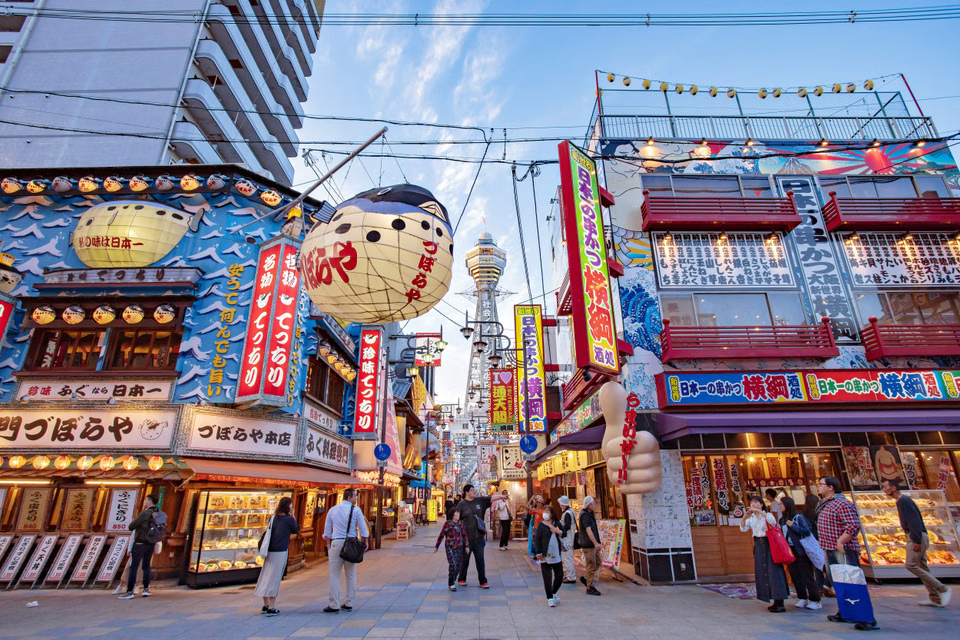
Dotonbori district illuminates with neon, smells of takoyaki (octopus balls) and okonomiyaki, and buzzes with crowds until late. It’s commercial, touristy, overwhelming—and genuinely fun. Kuromon Ichiba Market offers fresh seafood, street food, and local shopping without Dotonbori’s tourist density.
Osaka Castle impresses architecturally and historically. The surrounding park becomes spectacular during cherry blossom season.Day trip from Kyoto: Easily done (30-minute train ride)
Cherry Blossom Season: The Premium Experience
Timing and Reality
Cherry blossoms (sakura) bloom late March to early April in Tokyo, Kyoto, and Osaka—with full bloom typically April 1-7. This week-long window creates both magic and madness.
The Magic: Pink petals transform urban parks into dreamscapes. Japanese gather for hanami (flower viewing)—picnics under trees, sake flowing, temporary community forming around fleeting beauty. The cultural significance runs deep—cherry blossoms represent life’s impermanence, beauty’s fragility.
The Madness: Hotel prices surge 50-100%. A ₹15,000/night hotel becomes ₹30,000. Flights increase 20-30%. Popular spots overflow with tourists and Japanese travelers. Booking 4-6 months ahead becomes mandatory, not optional.Worth it? Depends entirely on priorities and budget flexibility. Cherry blossom season delivers unmatched beauty but demands significant financial and logistical commitment. Shoulder seasons (May-June, September-November) offer better value, comfortable weather, and fewer crowds—sacrificing only the sakura spectacle.
Visa Process for Indian Travelers
e-Visa System Simplified
Japan implemented e-Visa for Indian citizens in April 2024, streamlining what was previously bureaucratic process.
Requirements:
- Valid passport (minimum 6 months validity)
- Confirmed flight bookings (round trip)
- Hotel reservations/accommodation proof
- Financial documents (bank statements showing sufficient funds)
- Travel itinerary
- Application through VFS Global
Processing Time: 5-7 working days typically
Current Cost: ₹1,728 (single-entry), ₹3,457 (multiple-entry)
2026 Update: Fees increasing significantly—apply early if traveling early 2026
Pro Tip: Book refundable flights and hotels for visa application, then adjust if needed post-approval.
Cultural Etiquette for Indian Travelers
Navigating Japanese Social Norms
Japan operates on unspoken rules that feel intuitive to locals, confusing to outsiders. Understanding basics prevents uncomfortable situations.
Shoes Off: Remove shoes when entering homes, some restaurants, temples, ryokan (traditional inns). Slippers provided typically—never wear outdoor shoes inside.
Public Behavior: Quiet trains and public spaces. Phone conversations avoided on trains. No eating while walking (eat where you purchase food, then continue). Queue discipline absolute—cutting lines doesn’t happen.
Dining Etiquette:
- Slurping noodles acceptable (even expected)
- Don’t stick chopsticks vertically in rice (funeral connotation)
- Say “itadakimasu” before eating, “gochisousama deshita” after
- Tipping not practiced (can offend)
Bathroom Culture: High-tech toilets (washlets) have multiple buttons—figured out through trial or pictograms. Public bathrooms impeccably clean.
Bowing: Slight head nod sufficient for tourists. Deeper bows carry significance you probably don’t understand yet—don’t fake it.
Language Barrier: English limited outside major tourist areas. Google Translate camera function essential. Learn basic phrases: “Sumimasen” (excuse me), “Arigato gozaimasu” (thank you), “Wakarimase” (I don’t understand).
Cost Breakdown: Budgeting Ideas for Japan
What 7 Days May Cost
Budget Breakdown (Mid-Range Travel, 7 Days, Per Person):
- Flights (India-Japan roundtrip): ₹45,000-65,000
- Accommodation (₹5,000-8,000/night x 7): ₹35,000-56,000
- Japan Rail Pass (7-day): ₹25,000 (covers shinkansen, essential for intercity travel)
- Meals (₹2,000-3,000/day): ₹14,000-21,000
- Activities/Entrance Fees: ₹8,000-12,000
- Local Transport/Miscellaneous: ₹5,000-8,000
- Travel Insurance: ₹2,000-3,000
Total: ₹1,34,000-1,90,000 per person
Cherry Blossom Season: Add 30-40% to accommodation and flight costs.
Budget Strategies:
- Stay in business hotels or hostels (₹3,000-5,000/night)
- Convenience store meals (surprisingly good, ₹300-600)
- Skip expensive restaurants for lunch, splurge on dinner
- Walk when possible (cities are pedestrian-friendly)
- Free attractions plentiful (temples, parks, neighborhoods)
Sample 7-Day Itinerary
Day 1-2: Tokyo (Shibuya, Harajuku, Shinjuku)
Day 3: Tokyo (Asakusa, Akihabara) + evening to Kyoto via shinkansen
Day 4-5: Kyoto (Fushimi Inari, Kinkaku-ji, Arashiyama, Gion)
Day 6: Day trip to Nara (deer park, temples) or Osaka
Day 7: Return Tokyo, last-minute shopping, departure10-Day Version: Add Mt. Fuji (1 night), Hiroshima (1 night), extra Tokyo/Kyoto days
SilverSky Holidays: Simplifying Japan Travel
Planning Japan independently involves a lot of planning—rail passes, accommodation booking (navigating local Japanese sites for bookings), language barriers, and cultural navigation. We eliminate that friction to make your trip memorable for the right reasons.
Our Japan tour packages (Japan Discovery Package 5N 6D) handle end-to-end logistics, visa documentation support, flight bookings, accommodation in well-located hotels, Train Pass booking, English-speaking guides at key destinations, and structured itineraries with flexibility for personal exploration.
For first-time Japan travelers, this support transforms potentially stressful logistics into seamless experience. Imagine landing in Tokyo with everything pre-arranged—hotel check-in instructions in English, rail pass ready for pickup, detailed daily itineraries with backup options, 24/7 support if issues arise.
Corporate teams considering Japan for team retreats or incentive travel benefit from our experience coordinating group logistics—managing dietary restrictions (vegetarian options require advance planning in Japan), arranging private transportation, booking team activities like traditional tea ceremonies or kimono experiences, handling meeting space needs if combining work with cultural immersion.
For those who previously booked international travel planning services through us—whether Thailand packages, Bali tours, or Dubai trips—Japan represents the next evolution in travel checklist. It’s culturally richer, logistically more complex, and ultimately more rewarding than more accessible Asian destinations.
Japan in 2026
Japan represents something rare—a destination that genuinely differs from anywhere else. It challenges Indian assumptions about efficiency, service, public behavior, and cultural priorities. The contrast itself creates transformation rather than just vacation memories.
There is news of visa fee increase in 2026, book before mid-2026 to secure current rates. Cherry blossom season requires booking 4-6 months ahead regardless. Off-season travel (May-June, September-November) delivers better value and more authentic experiences minus the crowds.
Japan is not easy, language barriers frustrate, cultural norms often confuse, and costs surprise at times. But your travel stories, you can count on them — will be genuine transformation through travel.
Your Japan journey awaits. The Land of the Rising Sun rises earliest for those who plan ahead.