
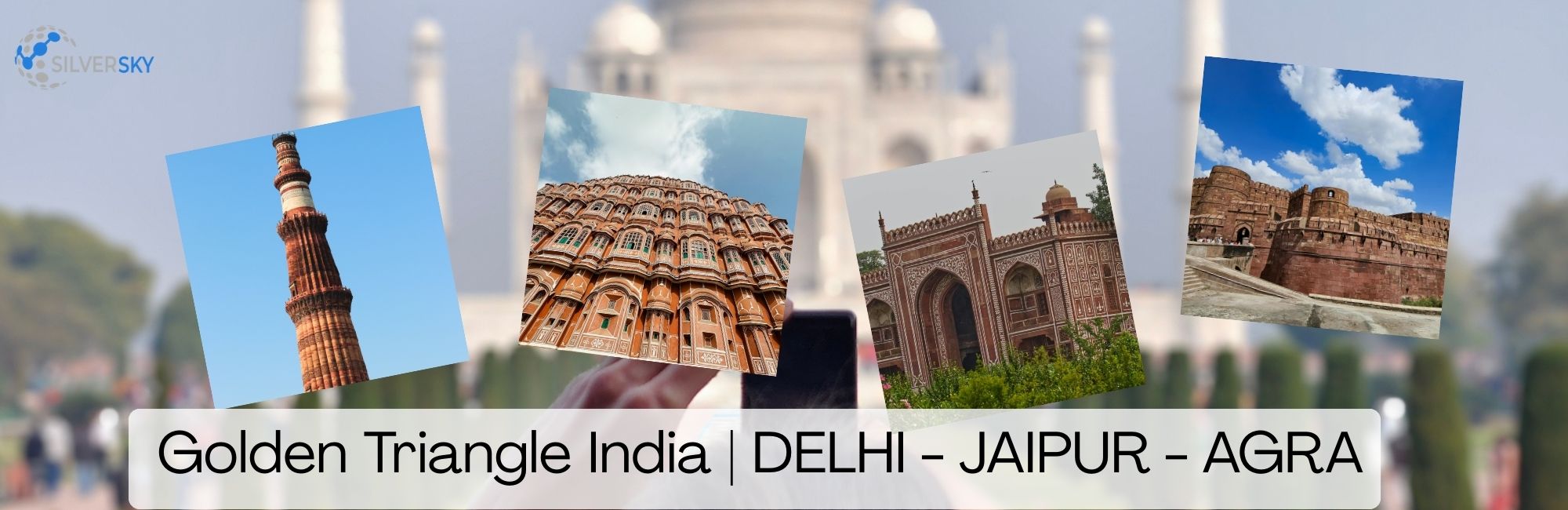
There is a reason the Golden Triangle—connecting Delhi, Agra, and Jaipur—remains the quintessential introduction to India. It is intense, historically dense, and visually overwhelming in the best possible way.
For first-time visitors, or even Indian travellers who have never explored North India properly, this route offers a cross-section of the country’s character. It brings together three very different cities of India into one compact journey. You get the Mughal grandeur of Agra, the royal Rajput heritage of Jaipur, and the layered, chaotic history of Delhi.
However, fitting three major cities into five days requires a strategy. The difference between a memorable trip and an exhausting one usually comes down to pacing. If you try to see every monument, you will spend your entire holiday in traffic. The goal of this guide is to help you understand the flow of a 5-day trip, manage the travel times, and prioritize the experiences that actually matter.
Whether you are comparing package options or planning a self-drive, this itinerary reflects a realistic pace for a golden triangle jaipur agra delhi 5 days route that balances sightseeing with sanity.
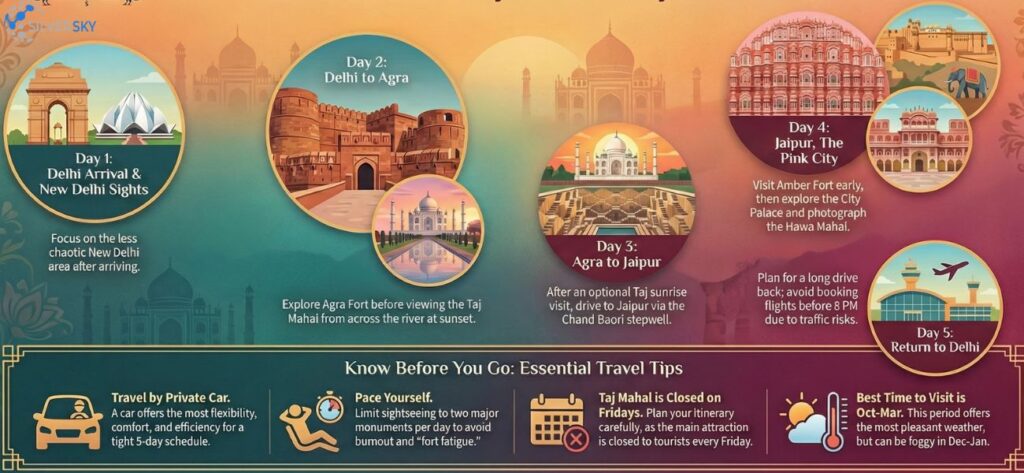
5-Day Golden Triangle India Itinerary: Jaipur, Agra, Delhi Highlights
This route works best in a loop, starting and ending in Delhi. We recommend hiring a private car and driver for the duration. While trains like the Gatimaan Express are excellent for the Delhi-Agra leg, having a dedicated vehicle gives you the freedom to stop at stepwells, highway dhabas, or ghost cities between destinations without lugging suitcases around.
- Start & End: Delhi (DEL)
- Best Time: Oct–Mar (cool & clearer skies) :contentReference[oaicite:2]{index=2}
- Most Efficient Transport: Private car / driver
- Suggested Pace: 2 cities at sunrise, 1 at sunset
Day 1 – Arrival in Delhi: Exploring the Capital’s Heritage
The Reality: Most international flights land late at night or early morning.
This is where many first-time travellers get overly ambitious.
They try to fit the Red Fort, Qutub Minar, and a market run into the same afternoon as their flight arrival. Don’t do it. Delhi is massive, and traffic can be unpredictable.
The Plan:
Focus your first day on “New Delhi”—the British-designed part of the city which is wider, greener, and slightly easier to navigate than the older quarters.
- Afternoon: Start with Humayun’s Tomb. It is often called the precursor to the Taj Mahal, and frankly, it is a much more peaceful introduction to Mughal architecture. The gardens are sprawling, and the crowds are generally manageable.
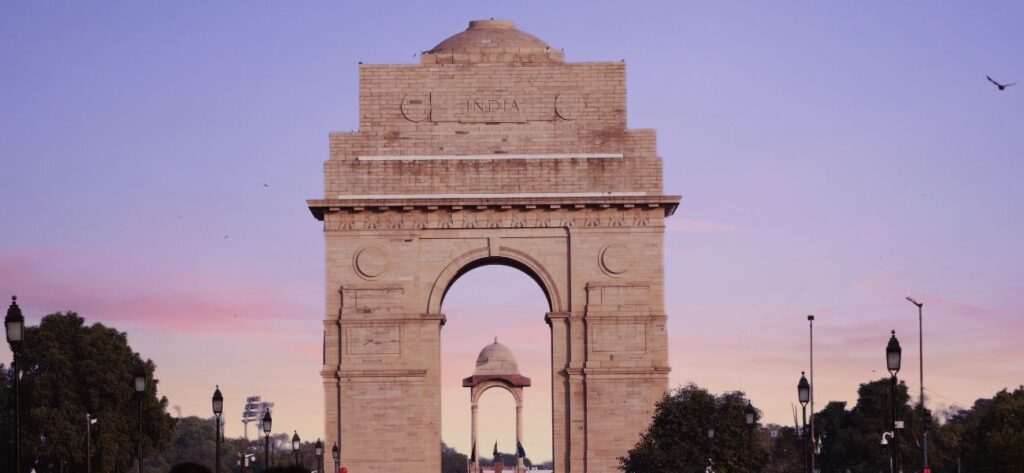
- Late Afternoon: Drive past the India Gate, President’s House (Rashtrapati Bhavan), and Parliament House. You likely won’t get out for long walks here due to security restrictions, but the drive down the Kartavya Path at sunset is atmospheric.
- Evening: If you have energy, visit Gurudwara Bangla Sahib. The community kitchen (Langar) here feeds thousands daily. It is a grounding, spiritual experience that shows the welcoming side of the capital.
Travel Tip: If you are staying in Aerocity or South Delhi, you are well-positioned for these sights. Avoid booking a hotel in Old Delhi for your first night unless you are ready for serious noise immediately.
If you have an extra morning or are extending your stay, nearby heritage sites like Jama Masjid or Raj Ghat (Mahatma Gandhi’s memorial) add historical context to Delhi’s role as the capital of India.
Day 2 – Delhi to Agra: Mughal Marvels and Taj Mahal Visit
The Drive:
Depart Delhi early—ideally by 8:00 AM.
The drive to Agra via the Yamuna Expressway takes about 3.5 to 4 hours.
On paper, it’s a smooth, straight run.
In reality, getting out of Delhi and into Agra’s narrow streets adds time that Google Maps doesn’t always account for.
The Plan:
- Arrival in Agra: Check into your hotel and freshen up. Agra is a smaller, dustier city than Delhi, and the contrast is immediate.
- Lunch: Agra is famous for its Mughlai cuisine. Try a rich mutton korma or a creamy paneer dish at a reputable restaurant like Pinch of Spice.
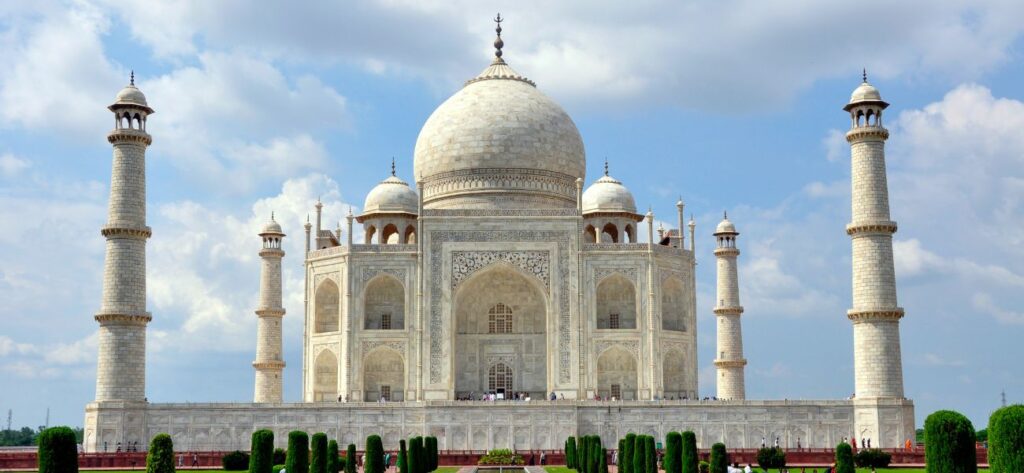
- Afternoon: Visit the Agra Fort. This isn’t just a fort; it’s a walled city. You can see the room where Emperor Shah Jahan was imprisoned by his son, with a heartbreaking view of the Taj Mahal, built by Shah Jahan in memory of Mumtaz Mahal, during the height of the Mughal era.
As one of the wonders of the world and a protected UNESCO World Heritage Site, the Taj Mahal rewards slow, unhurried exploration more than rushed photo stops. - Sunset at Mehtab Bagh: Instead of rushing to the Taj Mahal immediately, cross the river to Mehtab Bagh. These gardens offer a stunning rear view of the Taj Mahal across the Yamuna River at sunset, often without the crushing crowds of the main complex.
You’ll notice guides in Agra are very particular about exactly where you stand for photos. It can feel bossy, but just go with it—they know the specific angles that hide the crowds behind you.
Day 3 – Agra to Jaipur via Fatehpur Sikri: Royal Routes & Pink City Arrival
The Reality:
Most itineraries underestimate how draining this drive feels.
The journey from Agra to Jaipur is approx. 240 km and can take 5–6 hours depending on stops.
The Plan:
- Sunrise (Optional): If you didn’t go yesterday, visit the Taj Mahal at dawn. Gates open 30 minutes before sunrise. Note that bags, food, and tripods are strictly prohibited—carry only your phone, wallet, and water.
- Mid-Morning: Depart for Jaipur.
- Stop 1: Fatehpur Sikri. About an hour out of Agra lies this abandoned red sandstone city. Honest advice: It is magnificent, but if you’re already tired or the heat is peaking, this is the first stop I’d drop. It requires a lot of walking in the open sun.
- Stop 2: Chand Baori (Abhaneri). A slight detour off the highway brings you to one of India’s deepest and most symmetrical stepwells. It’s a geometric marvel that looks like an M.C. Escher painting come to life.
- Evening: Arrive in Jaipur. The transition from Uttar Pradesh to Rajasthan is visible—the landscape turns arid, and the architecture shifts to pink sandstone.
This is also the point where many travellers appreciate having a well-paced itinerary already handled, especially on longer driving days.
Day 4 – Jaipur Sightseeing: Palaces, Forts, and Markets
The Reality:
Jaipur is vibrant but intense.
Mornings are generally calm; evenings get chaotic fast as the walled city fills with traffic and shoppers.
The Plan:
- Morning: Amber Fort (Amer Fort). Go early (8:00 AM) to beat the heat. The fort sits on a hilltop. While many tourists take the elephant ride up, we recommend the jeep ride or walking—it’s faster and more ethical. The Hall of Mirrors (Sheesh Mahal) inside is the highlight.
- Photo Stop: On the way back, stop at Jal Mahal (Water Palace). You can’t enter it, but it makes for a beautiful photo floating in the Man Sagar Lake.
- Afternoon: Explore the City Palace, which is still the residence of the Jaipur royal family. Right next door is Jantar Mantar, an 18th-century astronomical observatory that looks bizarrely futuristic.
- Late Afternoon: Photo stop at Hawa Mahal (Palace of Winds). The best view is actually from the cafes across the street—grab a coffee and admire the 953 windows designed to let royal ladies watch the street without being seen.
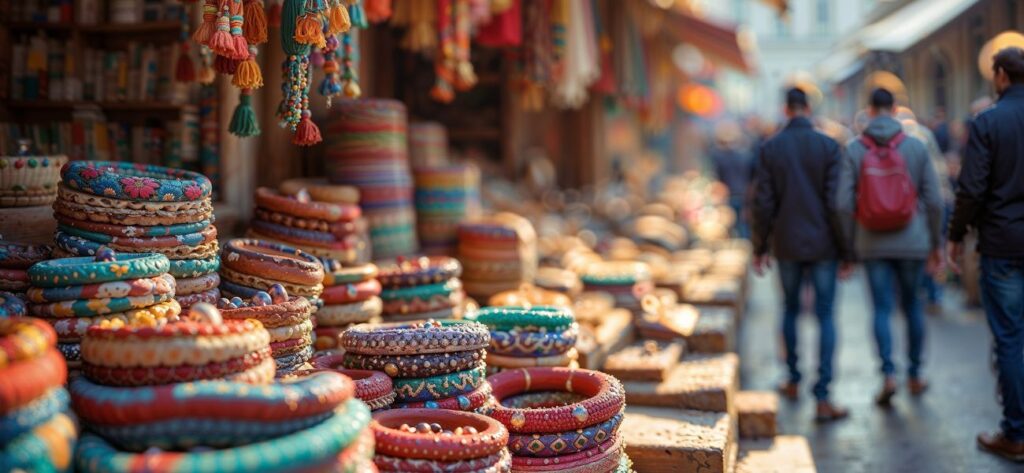
- Evening: Jaipur is a shopper’s paradise, and its local markets are among the most colourful on this tourist route. Explore Johari Bazaar for jewelry or Bapu Bazaar for textiles and mojari shoes.
Day 5 – Jaipur to Delhi: Final Sights and Departure
The Drive:
The drive back to Delhi takes about 5–6 hours.
On paper, it sounds manageable.
In reality, evening traffic near Gurgaon can stretch that far longer than expected. Plan your flight accordingly.
The Plan:
- Morning: Enjoy a leisurely breakfast. Heads up: Delhi and Jaipur hotel breakfasts tend to be heavier than most people expect—the parathas are hard to resist, but they will slow you down!
- Visit: If you have time, visit the Albert Hall Museum or take a quick tour of the Anokhi Museum of Hand Printing to understand the craft behind Jaipur’s textiles.
- Departure: Begin the drive back to Delhi.
- Drop-off: Most Golden Triangle tour itineraries conclude with a drop-off at Delhi International Airport (DEL) or a hotel if you are extending your stay.
Planning Tip: If your flight out is before 8:00 PM, consider flying directly from Jaipur to your next destination (or connecting in Delhi) rather than driving back. The risk of road delays is simply too high.
Must-See Attractions in Each Golden Triangle City
To help you decide where to spend your limited time, here is a breakdown of the non-negotiables versus the nice-to-haves.
Historic Sites and Monuments in Delhi
- Red Fort (Lal Qila): Iconic, but if you are seeing Agra Fort, you can skip entering this and just view it from the outside to save time.
- Qutub Minar: A towering victory minaret from the 12th century. The complex is filled with ruins and offers great history in a compact area.
- Lotus Temple: Beautiful flower-shaped architecture, but usually has long lines. Good for a quick photo, less essential to enter if pressed for time.
Iconic Wonders of Agra
- Taj Mahal: The centerpiece. Dedicate at least 2 hours here.
- Itmad-ud-Daulah (Baby Taj): Often overlooked. It is a jewel-box tomb that served as a draft for the Taj Mahal. Highly recommended if you finish the main Taj early.
- Agra Fort: Essential. It provides the military and residential context to the Taj’s romantic history.
Jaipur’s Architectural Gems
- Nahargarh Fort: sits high above the city. Great for sunset views over Jaipur, though it requires a winding drive up the mountain.
- Patrika Gate: A newer addition, this is highly “Instagrammable” with vibrant hand-painted archways. A quick 20-minute stop is usually enough.
- Galta Ji (Monkey Temple): A temple complex built into a narrow crevice of the hills, famous for its natural springs and large monkey population.
Unique Experiences Along the Golden Triangle Route
A golden triangle jaipur agra delhi 5 days trip shouldn’t just be about ticking off monuments. The magic is often in the pauses between the sites.
Local Cuisine, Restaurants, and Street Food Insights
- Delhi: The street food capital. Try Chole Bhature (spicy chickpeas with fried bread) or Aloo Tikki. For a safer street food experience, try Haldiram’s or Bikanervala.
- Agra: Famous for Petha, a translucent soft candy made from ash gourd. It’s very sweet and comes in many flavours (Kesar, Paan, Plain).
- Jaipur: Do not leave without trying Dal Baati Churma (lentils, hard wheat rolls, and sweet crumbled wheat). It is heavy, rich, and delicious. Laal Maas (fiery red mutton curry) is for the brave spice lovers.
Cultural Performances, Markets, and Crafts
In Agra, consider watching Mohabbat-the-Taj, a live theatre show that narrates the Taj Mahal’s history. It’s kitschy but fun. In Jaipur, block printing is a serious art form. At SilverSky, we often suggest visiting Bagru or Sanganer villages nearby if you are interested in seeing how the fabric is stamped by hand.
Guided Tours, Walking Trails, and Scenic Drives
Old Delhi is best explored via a rickshaw ride through Chandni Chowk. The lanes are too narrow for cars, and walking can be overwhelming. A rickshaw gives you a front-row seat to the chaos of the spice market (Khari Baoli) without getting trampled.
Planning Your Golden Triangle Trip: Travel Options & Practical Tips
Car vs Train vs Guided Tour – What Works Best
For a 5-day timeline, a private car is the clear winner.
- Train: The train network is fantastic, but trains can be delayed. Managing luggage and station transfers eats up valuable time.
- Bus: Not recommended for a short leisure trip due to lack of comfort and frequent stops.
- Private Car: Gives you door-to-door service, AC refuge from the heat, and the flexibility to leave 30 minutes later if you’re tired.
The Golden Triangle is one of India’s most popular tourist circuits, and a private car simply reduces friction across such a fast-moving route.
If you prefer not to juggle hotel locations, drivers, and monument timings yourself, working with a specialist who understands this route can save a lot of energy.
Transfer Timing, Crowds, and Common Planning Mistakes
- The “Closed on Friday” Rule: The Taj Mahal is closed to general tourists on Fridays. If your itinerary lands you in Agra on a Friday, you must shuffle the order.
- Underestimating Traffic: 10 km in Delhi can take 45 minutes. Always buffer your travel times.
- Over-planning: Don’t schedule more than two major monuments in a single day. You will get “fort fatigue.”
Safety, Etiquette, and Cultural Awareness
- Dress Code: India is conservative. Covering shoulders and knees is mandatory at temples and mosques, and respectful everywhere else. Carry a light scarf—it’s useful for sun protection and modesty.
- Tipping: It is customary to tip your driver and guides at the end of the tour. A standard range is ₹500–800 per day for a driver.
- Scams: Be wary of guides who insist on taking you to “special emporiums” or “government shops.” These are usually high-commission tourist traps.
Accommodation Choices: Where to Stay in Delhi, Agra, and Jaipur
The hotel infrastructure on this route is world-class, catering to every wallet.
Luxury & Heritage Stays
- Agra: The Oberoi Amarvilas is legendary, with every room offering a view of the Taj Mahal.
- Jaipur: Rambagh Palace or Jai Mahal Palace offer a taste of living like a Maharaja.
- Delhi: The Imperial or The Leela Palace offer colonial charm and modern opulence.
Boutique & Mid-Range Hotels
There is a rising trend of “haveli” hotels—old mansions converted into guesthouses. In Jaipur, look for heritage havelis in the Bani Park area. They offer character and personal service at a fraction of the cost of 5-star chains.
Budget, Family-Friendly, and Solo Traveller Options
Chains like Lemon Tree, Ibis, or Zone by The Park offer clean, standardized rooms perfect for travellers who just need a safe, cool place to sleep after a long day. Hostels like Zostel are excellent for solo travellers looking to meet people.
When to Visit: Best Time for a Golden Triangle Tour
Weather by Season (with pros & cons)
- October to March (Peak Season): This is the best time. The weather is pleasant (10°C to 25°C). However, December and January can see dense fog in the mornings, which may delay trains and obscure the view of the Taj Mahal until noon.
- April to June (Summer): Temperatures hit 40°C–45°C. It is grueling. If you visit now, start tours at 6 AM and stay indoors from 12 PM to 4 PM.
- July to September (Monsoon): The rain washes away the dust, making the monuments look vibrant. It’s humid, but crowds are lower and hotels are cheaper.
Festivals, Events, and Crowd Considerations
Diwali (usually Oct/Nov) and Holi (March) are massive. While culturally fascinating, they can disrupt travel logistics. Visiting during the Pushkar Camel Fair (near Jaipur) is a great add-on if you have an extra day.
Frequently Asked Questions
A standard package usually covers accommodation, a private vehicle with a driver, breakfast, and guided tours of the major monuments. Entrance fees to monuments are sometimes included or paid directly by the guest. At SilverSky, we focus on transparent inclusions so you aren’t surprised by hidden costs.
Absolutely. Common extensions include Ranthambore National Park (for tigers) located between Agra and Jaipur, or Varanasi (for spirituality), which is a short flight from Delhi.
While this guide covers a golden triangle Jaipur Agra Delhi 5 days route, 6 or 7 days is even better. It allows you to add Ranthambore or simply relax. However, 5 days is the minimum required to do it justice without rushing.
Ready to Plan Your Golden Triangle Trip?
The Golden Triangle is more than just three cities on a map; it’s a crash course in India’s soul. Most people finish the Golden Triangle tired, a little overwhelmed, but incredibly glad they didn’t rush it any further.
If you are looking for a partner to help handle the driving, the guides, and the pacing so you can focus on the experience, we’d love to help.