
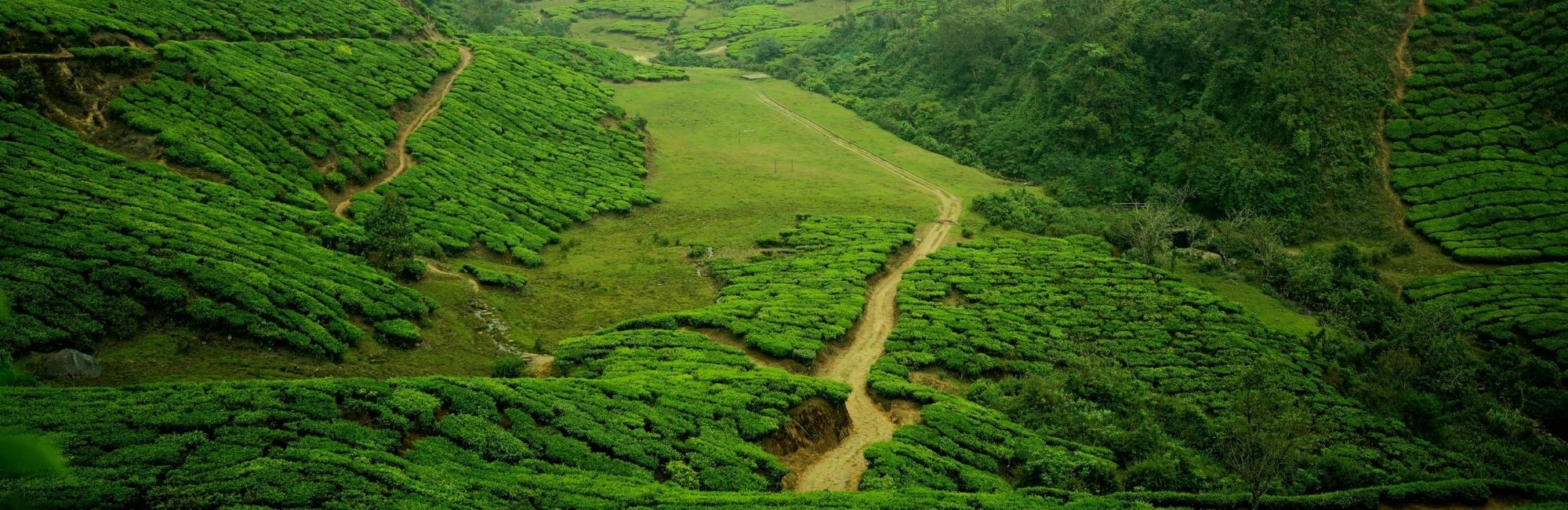
If you have seen photos of Munnar, you have seen the green. That impossible, undulating carpet of emerald that seems to stretch until it hits the granite skyline of the Western Ghats. It looks serene in a picture.
But standing in the middle of it is different. Unlike most Indian hill stations built around viewpoints and malls, Munnar still functions as a working landscape first.
The air here has a weight to it—crisp, cool, and smelling distinctly of damp earth and crushed leaves. When you step off the bus or out of your taxi, the first thing you notice isn’t the view; it’s the sudden drop in temperature and the silence, assuming you’ve managed to get away from the clamour of Munnar town itself.
I’ve spent enough time navigating these hills to know when they reward you—and when they punish you. I’ve watched sunrises that made waking up at 3:30 AM worth the agony, and I’ve been soaked to the bone by monsoon rains that arrived without warning. Munnar is not just a sightseeing stop; it is a place that demands you walk through it. The tea plantations aren’t just scenery; they are working farms, historic landmarks, and the gateway to some of the best trekking in South India.
This isn’t a guide for the traveller who wants to tick boxes from a tour bus window. This is for you if you want to feel the crunch of gravel under your boots, smell the fermenting tea leaves, and understand why the British planters fell in love with this misty corner of Kerala over a century ago.
Discovering Munnar’s Tea Plantations and Trekking Trails
Why Munnar is Famous for Tea Estates and Trekking?
Munnar exists as it does today because of tea. Before the late 19th century, this was dense, inhospitable jungle—part of the High Range in the Western Ghats. The transformation from wild forest to manicured garden is a complicated history of colonial ambition and engineering, but the result is a landscape unique in India.
The reason this region is famous for trekking isn’t just the tea, though. It’s the contrast.
Tea cultivation here isn’t decorative—it dictates the slopes, the paths, and even where people live.
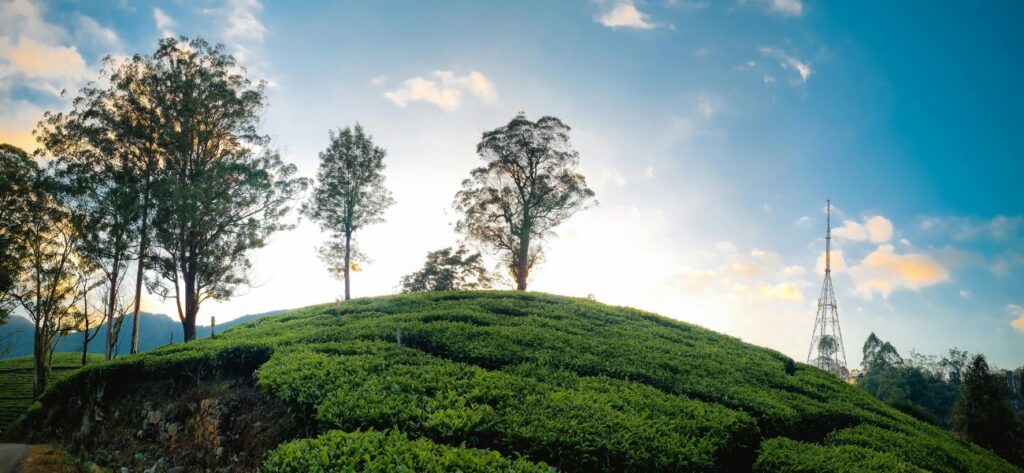
On a single trek, you might start walking through neatly trimmed tea bushes (Camellia sinensis), which are essentially man-made monocultures, and then suddenly cross a ridge into a “Shola” forest. Sholas are ancient, stunted tropical montane forests that act like sponges, holding water for the ecosystem. Walking here feels prehistoric. The trees are gnarled and moss-covered, blocking out the sun.
Then, you break out onto a grassland peak with a 360-degree view of the Tamil Nadu plains on one side and the Kerala hills on the other. That variety—Tea, Shola, Grassland—is the triad of Munnar trekking. You don’t get bored because the terrain shifts every hour.
Overview of the Top Tea Gardens in Munnar
You will hear names like Tata and Harrison Malayalam thrown around constantly. These corporations own the vast majority of the land here. However, for a visitor, the estates are less about ownership and more about geography.
Kannan Devan Hills Plantation (KDHP): This is the behemoth. Spanning thousands of acres, this is India’s first employee-owned tea plantation company. Their lands cover much of what tourists see near the main town. The history here is palpable; the tea bushes are decades old, and the factory systems are a blend of colonial machinery and modern efficiency.
Kolukkumalai: Sitting at over 7,000 feet, this is claimed to be the world’s highest organic tea plantation. The tea here grows slower due to the altitude, which supposedly gives it a distinct flavor. It is rugged, hard to reach, and visually dramatic.
Lockhart Estate: One of the oldest, located near the Gap Road. It offers a slightly different topography—steeper valleys and frequent mist rolling in from the coast.
Sevenmallay: Close to town, often where you see the “postcard” shots of tea pickers. It’s accessible but can get crowded.
The scale of these gardens is hard to comprehend until you are standing on a ridge, looking down at a valley that looks like a giant green quilt has been draped over it.
Essential Preparation for Your Munnar Tea Estate Tour
What to Pack for Trekking Trails and Plantation Visits
Munnar is deceptive. At noon, the sun can burn your neck; by 4:00 PM, the wind can cut through a cotton shirt. Layering is not just advice; it is a requirement.
Here is what actually works:
- A breathable base layer: You will sweat on the uphill climbs. Cotton stays wet and gets cold. Synthetic or wool blends are better.
- A fleece or light down jacket: Essential for early mornings and late evenings.
- Rain gear: A poncho is better than an umbrella if you are trekking. The wind in the gaps can turn an umbrella inside out in seconds. Even in “dry” months, mist can soak you.
- Leech socks or salt: Let’s be real. If you are trekking into the Shola forests or damp tea trails, especially post-monsoon, leeches are a reality. They are harmless but messy. Leech socks (canvas over-socks) are the most effective barrier.
- Sun protection: The altitude is high. The UV index is higher than you think. Hat and sunglasses are mandatory. At nearly 1,600–2,600 metres above sea level, the thinner air surprises first-time trekkers.
Choosing the Right Trekking Gear for Munnar’s Terrain
You do not need mountaineering boots for most Munnar tea plantation trekking trails, but flip-flops or smooth-soled sneakers are a recipe for a twisted ankle.
The terrain in the tea gardens is loose soil and gravel. It slides underfoot.
- Footwear: A trail running shoe or a light hiking boot with good grip is ideal. You want ankle support if you are doing the peak climbs like Meesapulimala or Chokramudi.
- Poles: If you have bad knees, bring a trekking pole. The descents through the tea rows can be steep and repetitive on the joints.
- Hydration: Carry at least 2 liters of water. The cool air tricks you into thinking you aren’t dehydrated.
- Backpack: A 20-30L daypack with a rain cover. Keep your hands free for balance.
Beginner’s Guide to Exploring Tea Plantations & Trekking in Munnar
Getting Started: How to Book Tea Estate Tours and Guided Treks
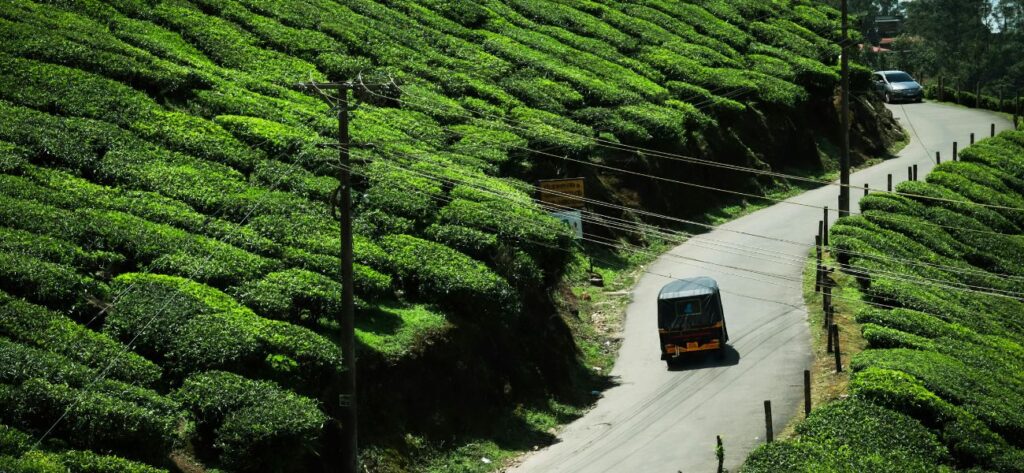
You cannot simply wander into any tea estate you see. These are private properties. While walking on the public tarmac roads cutting through estates is fine, stepping into the tea rows or hiking up the estate paths is technically trespassing without permission.
More importantly, the trails are unmarked mazes. A path used by tea pickers might dead-end at a cliff or lead you miles away from the road.
This is where planning matters. You usually book through your hotel or a specialized operator. At SilverSky Holidays, for instance, we emphasize connecting travellers with local guides who have the specific estate permissions. A good guide does two things: keeps you legal and keeps you safe. They know which patch of forest has a resident bison herd and which ridge offers the best light for photography.
Most guided treks fall into two buckets:
- Soft Treks: 2-4 hours, rolling terrain, mostly on tea paths.
- Hard Treks: 5-8 hours, summiting a peak, involving steep ascents and Shola forest crossings.
Understanding Safety, Entry Fees, and Timings for Popular Estates
Safety in Munnar isn’t about crime; it’s about wildlife.
Wild elephants are common in the tea estates. They move silently and can be aggressive if startled. A local guide knows the signs—fresh dung, broken branches, or the specific smell of an elephant herd—long before you do. Never trek alone in remote estates early in the morning or late at evening.
Entry Fees:
- Tea Museums: Usually around ₹150–₹200 per person.
- National Parks (Eravikulam): Higher fees (₹200 for Indians, ₹500+ for foreigners), and you often need to book online in advance to skip the queue.
- Private Trekking Routes: These costs are usually bundled into the guide fee (ranging from ₹1,500 to ₹4,000 depending on the group size and duration).
Timings:
Plantation activity starts early. Tea pickers are out by 8:00 AM. The best time to trek is 6:30 AM to 11:00 AM. After that, the sun is harsh, and the mist often obscures the views.
Step-by-Step Guide to Enjoying Munnar’s Tea Trails
Step 1: Selecting Beginner-Friendly Tea Plantation Treks
If you are new to hiking, start with the Lakshmi Hills Trek.
It’s a classic Munnar experience. You start just outside the main town. The climb is gradual, taking you through rocky ridges and tea slopes. It takes about 3 to 4 hours. The payoff is a view of Anamudi (the highest peak in South India) on a clear day. It’s manageable for families with active kids.
Another option is the Chithirapuram Walk. This is less of a “trek” and more of a village and plantation ramble. It’s lower in altitude, so it can be warmer, but you see the spice plantations (cardamom and pepper) intermingled with tea.
Step 2: Joining a Tea Factory Visit and Tasting Experience
After a morning walk, you will likely be tired and hungry. This is the perfect time for a factory tour. The Lockhart Tea Factory remains a favorite because it feels authentic.

As you walk in, the smell hits you—a mix of cut grass and malt. You will see the process: Withering (drying the leaves), Rolling (twisting them), Oxidation (where green turns to brown/black), and Drying. Seeing the full cycle of tea production makes the landscape outside feel purposeful rather than scenic.
Once you understand tea processing, you start recognising why certain estates smell sweeter or earthier at different times of day.
The tasting session usually follows. This isn’t a high-tea ceremony with cucumber sandwiches. It’s a technical tasting. You’ll learn to slurp the tea (to aerate it) and distinguish between “Dust” (strong, for milk tea) and “Leaf” (lighter, for black tea).
Step 3: Combining Trekking with Visits to Munnar Tea Museum
The KDHP Tea Museum at Nallathanni Estate is a logical stop, though it gets crowded.
What many people still call “Tata Tea estates” locally are now part of the employee-run KDHP system. It houses some fascinating curiosities, like the original 1905 tea roller and the “Pelton Wheel” used for power generation.
Pro tip: Don’t just do the museum. Use it as a trailhead. There are walks around the Nallathanni estate that are quiet and offer nice views of the factory from above. Combine the history lesson with a 45-minute loop walk to stretch your legs.
Step 4: Exploring Scenic Spots Along the Munnar Trekking Trails
The best viewpoints are not the ones with the signboards and parking lots. They are the spots you find on the trail.
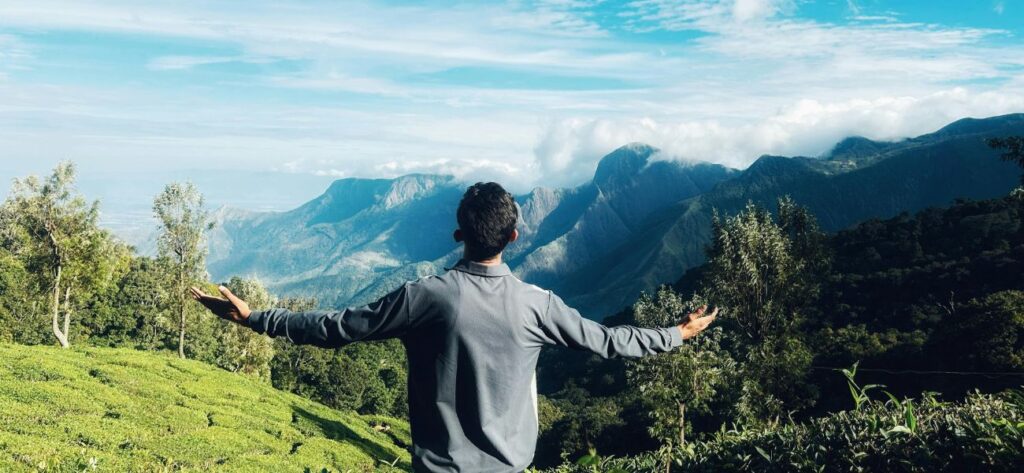
- Top Station: Famous, yes, but if you trek the Ellapatti route towards Top Station, you avoid the traffic jams. You walk through dense clouds (literally) to reach a point where the Western Ghats drop abruptly into the Tamil Nadu plains.
- Phantom Head: A small peak accessible via a short trek near the Suryanelli area. It’s fantastic for sunsets, offering a jagged silhouette against the sky.These ridgelines offer panoramic views without the noise and traffic that plague roadside viewpoints.
Where to Stay Near Munnar’s Best Tea Plantations and Trails
Where you sleep defines your trip. Munnar town is chaotic, noisy, and full of traffic jams. Avoid staying in the market area if you want nature.
Recommended Homestays, Resorts, and Eco-Lodges for Trekkers
The Plantation Bungalows:
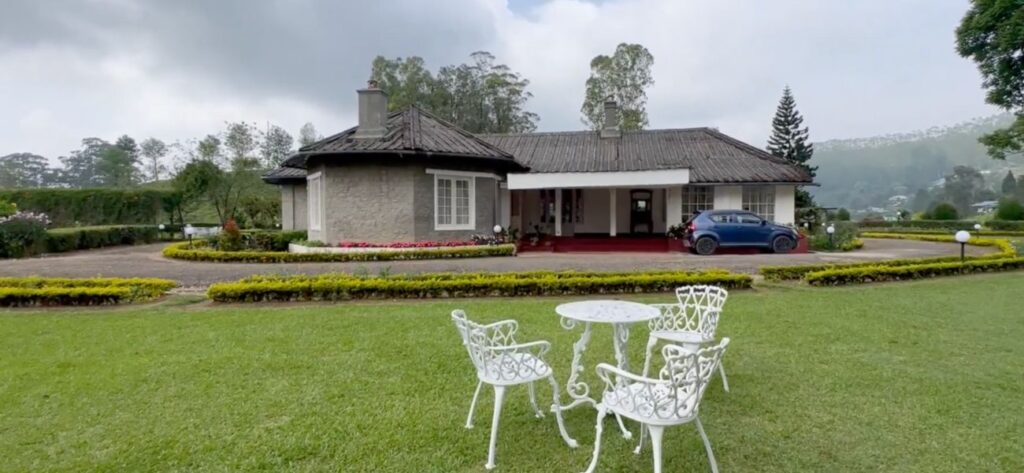
If budget allows, stay in a colonial-era planter’s bungalow. These are converted heritage homes located inside the estates. It’s expensive, but you have the entire estate to yourself after the tourists leave. You wake up, step onto the lawn, and you are on the trail.
Look for properties in the Chithirapuram or Chinnakanal areas.
Eco-Lodges and Tents:
For the adventure-focused, the camps in Suryanelli or Yellapetty are excellent. These are often semi-permanent tents with attached baths. They are cold at night (bring thermals!), but the campfire camaraderie and the sunrise views are unbeatable. This is often where the serious trekkers base themselves for the Meesapulimala trek.
Homestays:
To save money and eat better, pick a homestay on the outskirts (towards Adimali or Bison Valley). You get homemade Kerala food—Putu and Kadala curry for breakfast—and hosts who can point you to hidden waterfalls nearby.
SilverSky Tip: We often suggest clients split their stay—two nights in a plantation resort for comfort, and one night in a high-altitude camp for the experience.
Planning tip:
If you want Munnar paced properly—without backtracking, rushed treks, or staying in the wrong area—we usually suggest building the trip around where you trek, not where hotels are cheapest.
At SilverSky Holidays, we help travellers plan Kerala itineraries that combine tea estate stays, guided treks, and realistic travel times, instead of packing everything into Munnar town.
You can explore our Kerala tour packages or ask for a custom plan based on how active you want your days to be.
Munnar Weather: Best Time for Tea Estate Tours and Trekking
Seasonal Highlights and Climate Tips for Planning Your Visit
Munnar has three distinct personalities.
Winter (December to February):
This is peak trekking season. The air is dry, the sky is a piercing blue, and the views are endless. Mornings can drop to single digits (Celsius). Frost sometimes coats the tea leaves in the upper valleys (the famous “frost in Munnar” phenomenon).
Trade-off: It is crowded. Prices are high.
Summer (March to May):
It gets warmer during the day, but evenings are still pleasant. The tea plantations are vibrant green. This is a good time for light trekking, though the waterfalls may be dry.
Trade-off: Hazy views due to heat rising from the plains.
Monsoon (June to September):
This is for the brave. The rain is torrential. The leech population explodes. Trekking is dangerous due to slippery rocks and mudslides.
However: It is hauntingly beautiful. The mist is atmospheric, and the waterfalls are roaring. If you visit now, stick to hard-surface walks and estate tours; skip the steep summits.
Post-Monsoon (September to November):
My personal favourite. The rains have washed the dust away. Everything is lush. Post-monsoon is when the hills explode into lush greenery, often at the cost of clear long-distance views. The waterfalls are full, but the sun is out & bright.
During monsoon and early post-monsoon months, the misty mountains feel cinematic but unpredictable.
Must-Visit Tea Estates Offering Trekking Experiences
Kolukkumalai Tea Estate: Entry Fees, Timings, and Trek Details
This is the big one. To get here, you have to endure a bone-rattling 1-hour Jeep ride from Suryanelli. There is no paved road, just a boulder-strewn track.
But you do it for the sunrise. You reach the top before dawn. As the sun comes up, you often see the “sea of clouds”—where the clouds are below you, covering the Tamil Nadu plains, and the peaks stick out like islands.
- Trek Difficulty: Moderate. You can walk from the tea factory up to the “Tiger Rock.”
- Fees: Jeep hire costs between ₹2,000 and ₹3,000 (per jeep). Entry to the estate is nominal (around ₹100-200).
- Timing: Leave Suryanelli by 4:30 AM.
Kannan Devan Hills and Lockhart Tea Estate Trails
The Chokramudi Trek:
Often accessed via the Gap Road near Lockhart, this is a distinct peak. It’s a staged trek.
Level 1 is Shola forest. Level 2 is Grassland. Level 3 is Rocky terrain.
You can stop at any level. It is steeper than Lakshmi Hills but offers a more dramatic sense of elevation.
Sevenmallay Estate:
Good for a half-day wander. It’s closer to town, making it a good option if you are short on time. You can walk through the tea fields and see the workers plucking leaves (usually with shears these days, not by hand).
Things to Do During a Munnar Tea Estate Tour
Tea Tasting, Bird Watching, and Photography Opportunities
Photography:
The light in Munnar is tricky. The best light is the “Golden Hour” (6:30-8:00 AM) when the sun hits the dew on the leaves. By 10:00 AM, the sun is overhead and casts harsh shadows, making the tea look flat in photos.
Shot tip: Look for the “patterns.” The tea bushes are planted in contours. Find a high vantage point to shoot down and capture the geometric lines.
Bird Watching:
Keep your ears open for the Malabar Whistling Thrush. It sounds like an idle schoolboy whistling a tune. You might also spot the Nilgiri Flycatcher or the Great Hornbill in the canopy of the Shola trees. Binoculars are worth the weight.
Cultural Experiences and Local Cuisine Near the Estates
You are in tea country, so the food is fuel. Tea culture here isn’t curated for visitors—it’s woven into daily routines, wages, and meal breaks.
Stop at a small roadside “thattu kada” (tea shop). Order a “Kattan Chaya” (black tea) and “Pazhampori” (banana fritter). A simple cup of tea tastes different when you’ve just walked past the fields it came from. The sweetness of the banana balances the strength of the tea perfectly.

The culture here is a mix of Kerala and Tamil, as many plantation workers migrated from Tamil Nadu generations ago. You will find excellent Dosa and Idli in the canteen-style eateries near the estates.
Munnar is not a place you “finish.” It is a place that changes with every thousand feet of elevation and every passing cloud. You might come for the photos of the tea gardens, but you will remember the sound of the wind in the Shola forest and the burning in your calves after a climb to Top Station.
Plan well. Respect the private land. Bring good shoes. And when you are up there, standing on a ridge with the world green and silent around you, put the camera down for a minute and just breathe it in. That is the real souvenir.
If Munnar is on your list and you want to experience the tea plantations and trekking without guesswork, planning matters more than people expect.
We help travellers build Kerala trips that balance walking days, estate stays, and recovery time—so you enjoy the hills instead of rushing through them.
If you’d like help planning a Munnar-focused Kerala itinerary, you can explore our curated Kerala packages or speak to our travel expert to tailor one around your pace and interests.
Frequently Asked Questions: Munnar Tea Plantation & Trekking
The Lakshmi Hills trek is widely considered the best for beginners. It offers a gentle gradient, rolling through tea estates and grasslands without requiring technical climbing skills. The Letshmi Estate area also has soft walking trails that are suitable for families.
Costs vary based on the exclusivity. A group trek might cost ₹1,000–₹1,500 per person, while a private guide for a half-day trek ranges from ₹2,500 to ₹4,000. You should book through your hotel or a reputable travel agency like SilverSky Holidays to ensure you have a government-authorized guide who has permission to enter private estate lands.
Yes, the KDHP Tea Museum (Nallathanni Estate) is easily accessible. A great itinerary is to do a morning trek in the Lakshmi Hills or near the Nallathanni estate and end your walk at the museum around 11:00 AM. It helps to cool down indoors while learning about the machinery you just walked past.
Beware of Elephants: This is the top rule. If your guide says stop, you stop. Never approach wild elephants for a selfie.
Stay on the Path: The tea bushes hide ditches and snakes.
Leech Protection: If visiting during or just after the monsoon, wear leech socks or apply salt/tobacco powder to your shoes.
Sun Protection: The cool air masks the sun’s intensity. Wear a hat and sunscreen to avoid getting burnt.