
Thinking about going to Himachal Pradesh? You may be looking through many travel packages, seeing beautiful photos on Instagram, and getting lots of different ideas about when is the best time to visit, like May or October. To be clear, there is no one right answer. Himachal is not just one place. It is like five very different worlds put together. There is the old feel of Shimla, and there is the wild look of Spiti Valley. The kind of trip you have will depend on where you go and when, and also what your body can handle when you are that high up.
This guide shows you the real things you need to know. It does not give fancy details. You will see what you feel, how much you will pay, and things that could go wrong. This helps you plan better and make good choices.
Understanding Himachal: It’s Bigger Than You Think
Here’s what many people do not see: Himachal is not just “a hill station.” It is a big state—55,673 square kilometres—with places that go up from 360 metres to 6,500 metres. That’s a big jump. A day in Shimla at 2,200 metres can feel nothing like a day in Spiti at more than 3,700 metres. The weather is not the same, the roads and buildings are not the same, and your body can feel it too.
The lower areas like Shimla and Dharamshala get a lot of rain. Dharamshala gets about 3,400mm each year. Higher up, places like Spiti get much less, with under 200mm in a year. Why is this important? If you come here during the monsoon and think rain means less fun, you might find Spiti dry and sunny instead. The way weather is here doesn’t match what you think, it matches the land around it.
Shimla: Walking Through Colonial Ghosts
Shimla takes you back to the feel of India in the 1880s. The British made this town for summer breaks. You can still see signs of them here. The old buildings stand tall. There are wide spaces for all to use. The people move along, but not fast. Everyone seems to take their time as they walk through town.
The Ridge is the main area in Shimla. It is a wide and open space where you find many important buildings. Christ Church looks nice. It was built in the 1850s, the stained glass in it came from England. The Viceregal Lodge is now a museum. It lets you see how British officials used to live. Gorton Castle mixes Victorian and Indian styles. The mix feels odd at first, but it looks good anyway.
Most people try to see all of Shimla in one day, but that is not a good idea. A better way to feel the city is to spend the first afternoon walking along The Ridge. Stop by Christ Church. You can also have tea at a spot with a nice view. On your second morning, go to Mall Road early before it gets busy. Enjoy the cafes and do some shopping. This is the time when you really get what Shimla is about, instead of just rushing through and missing things.
If you want to see how people in Britain used to travel, you should try the toy train from Kalka to Shimla. This train ride is 96 kilometres long. It was built in 1903. The train goes around many curves and through 103 tunnels. Book a special compartment if you can. It is more fun than sitting in the regular seats.
Kufri is about a 30-minute drive from here. Most people go there for pony rides, to see snow in winter, and to visit the viewpoints. It is fine, but that is not why you should come here. You should come for the buildings, the calm walks, and the cafes.
A real Shimla day looks like:
- Start the day with chai at your place, then walk to The Ridge.
- Spend an hour at the church there. Go inside, take your time, and notice the small things.
- Spend 30 minutes in the museum at the Viceregal Lodge.
- Have lunch at a local spot. You can try some momos or rajma-chawal.
- In the afternoon, walk around Mall Road. You can buy local jam or warm scarves.
- Enjoy evening tea somewhere. Watch how the light changes over the mountains.
Who is it for?: Families that have young kids like it, and people who come to the mountains for the first time also get to enjoy it. Couples who want something calm will like it here too. Seniors can walk around without big changes in how high they are compared to the ground. People who want to see buildings and architecture will love it. If you come for action, sports, or to feel a rush, this is not the spot for you.
What you pay each day for one person (not counting flights, when you share a room):
- Budget guesthouses: Anywhere from ₹2,500 to ₹4,000
- Mid-range hotels or homestays: ₹4,500 to ₹7,000
- Nicer places: ₹8,000 and up

Manali: Where the Pace Kicks Up
Manali has a feel like no other place. A lot of people come here who love adventure. You will see many couples, friends, and those who want to try something fun.
There are two main parts in the town. Old Manali has homestays and small cafes. It has a backpacker feel and is very relaxed. The other part is New Manali. Here, things are more busy. You will find the bazaar, hotels, and people moving around booking trips.
Here is what truly matters in Manali. The main spots are Rohtang Pass and Solang Valley. People go there for day trips.
The Rohtang Pass Thing: What You Actually Need to Know
Rohtang Pass is at 3,978 metres. The trees start to thin out here. You feel the land get high. Snow is common, especially in May and June, and again in October. There is something people often do not mention about this place: You need a permit to get in, and the rules to get one are very strict.
The government lets in only 800 petrol and 400 diesel vehicles each day to protect the mountain area. This means there are 1,200 vehicles allowed in total. In the busy months, all the slots fill up very fast—sometimes in just 30 seconds or within 2 minutes.
You need to book your permit online at rohtangpermits.nic.in for dates that are 2 to 6 days away. If you miss your chance when the window opens, you have to change your travel dates. You can also try for cancellations at the SDM office in Manali the next day.
Here’s the honest take: Rohtang is worth it, but it’s not magical in the way you might expect. You drive up early (5–6 am is ideal), reach the summit around 7–8 am when visibility is best, and you’re basically standing at a high-altitude pass taking photos. There’s one small restaurant, some gift shops, and if snow is there, maybe 30–45 minutes of walking on it. Then you come down. The real experience is the drive itself—the switchbacks, watching the forest change, feeling your body adjust to altitude.
Pro tip: Check the real-time status of the pass a day before you go. They sometimes close it, even in “open season,” if there is fresh snowfall or if it is too risky. Hotel staff and police WhatsApp groups often share news before the official website does.
Solang Valley: Adventure Actually Happens Here
Solang Valley is 14 kilometres away from Manali and is at 2,680 metres. This is the place for paragliding. In the winter, skiing is very popular here. A lot of hiking trails start in this place too. There is always something to do, not just “we go here and take a photo.”
Paragliding is the main thing people come here for. The best time to go is from April to June or from September to October. A tandem flight costs between ₹2,000 and ₹4,500. In this flight, you are tied to a pilot who knows what to do. The flight can last from 10 to 40 minutes. It depends on the weather and the place you take off from. Solang is at 8,400 feet and offers shorter flights. This is good if you feel scared. For longer flights, you can choose Marhi or Fatru. These two places are higher, so you can stay in the air for more time. If you feel nervous about paragliding, you should pick Solang. If you want the whole adventure, you can go to Marhi or Fatru.
Skiing is open from December to February. The amount of snow is not always the same. There is good snow in most of January. December and February sometimes do not have much snow. You can rent equipment for about ₹500 to ₹1,000 per day.
Many people visit Solang from Manali for the day. It is a quick 30 minute trip by car. When you get there, you can walk around the fields, take photos, try paragliding if you feel like it, eat lunch at a local place, and then go back. This is a good way to see it, but if you spend the night, you can watch the sunrise without any crowd.
Real Solang day:
- 8 am: Drive from Manali
- 9 am–12 pm: Walk around, take photos, and spend some time there
- 12–1 pm: Lunch
- 1–3 pm: Rest or try paragliding
- 3:30 pm: Drive back to Manali
If you’re doing paragliding, add an extra 1–2 hours for the actual experience (waiting, suiting up, debriefing after).
Who is it for: Honeymoon couples, groups of friends that want adventure, families with teens, and those who want an exciting rush. International tourists come here too because the infrastructure is solid and many people speak English.
Here is what you pay per person each day (no flights, shared room):
- Budget guesthouses and dorm beds: Ranging between ₹2,000–3,500
- Mid-range small hotels/homestays: ₹4,500–7,000
- Nicer places: ₹8,500+

Dharamshala & McLeodganj: A Whole Different Feel
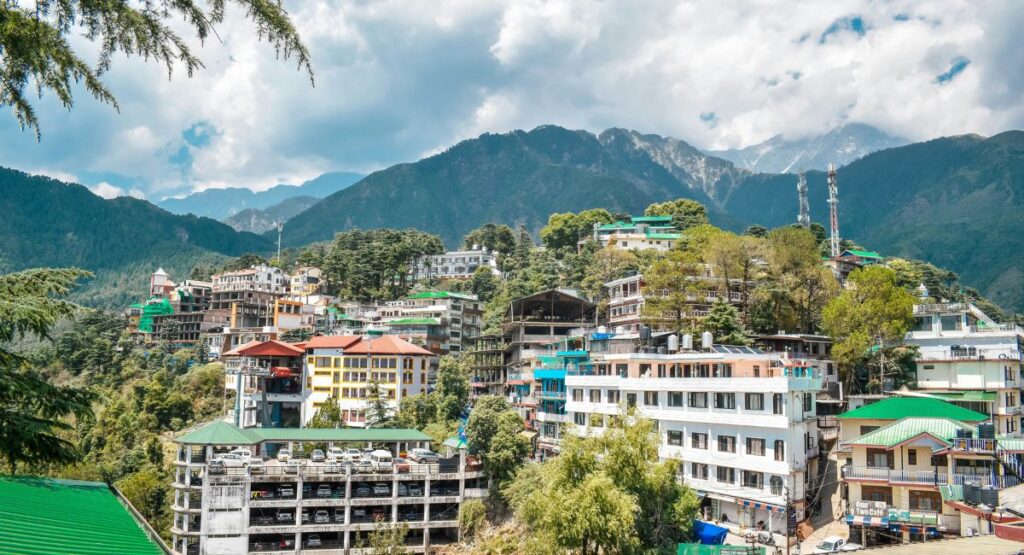
McLeodganj is the home of India’s Tibetan community. It is more than just a place for tourists. People live and work here. The Dalai Lama lives here (in a secured area you won’t visit), and there’s a Tibetan government-in-exile based here. All of this gives the place a feel that is not like other Indian hill stations.
Prayer flags move in the wind on many buildings. The Tibetan language is seen on signs next to Hindi and English. You can see monks in red robes. Food places offer momos and thukpa. This is not “showing culture just for tourists.” This is real life, and people who visit are welcome to watch and join in.
The Tsuglagkhang Complex is the main religious place in the area. It has prayer halls, places for monks to live, and a small museum about Buddhist art. You can enter respectfully (shoes off, quiet voice), watch monks at prayer times if you’re there at the right hours, and feel what an active religious community actually feels like.
Namgyal Monastery is close to this place. It is like Tsuglagkhang, but it usually has less people around.
The food here is mostly vegetarian because many people in this Buddhist community like to eat that way. You will find momos, thukpa, dal, rice, vegetables, and paneer. People who want meat can still get it, but it is not the default choose. Cafes here are really good. The spots like Bodhi Greens (organic, plant-based), Trek and Dine (Mediterranean fusion), and Jimmy’s Asian Kitchen (makes good sushi) are popular. When you eat here, it feels like you are eating with local people, not just visitors.
The Triund Trek: Easier Than You Think, But Not Easy
Triund Trek is well known, and there is a good reason for that. This trek goes from McLeodganj, which is at 1,750 metres, and takes you up to Triund Hill at 2,875 metres. You get a total climb of about 1,125 metres over 9 kilometres. The first 5 kilometres take you through a forest, and the path goes up slowly. The last 4 kilometres feel much more steep, with many turns as you go up. People usually take about 3 hours to go up and 2 hours to get down. When you reach the top, most people like to spend an hour or two there, just to sit and see the Dhauladhar range stretching out forever.
Here’s the real talk: it’s called “easy-to-moderate,” which means most people can do it, but “most people” might feel tired and sore the next day. If you live at sea level in Mumbai or Bangalore, this will feel tougher than you think because of the height and the climbing together. Go slow, take breaks, keep drinking water, and you will be fine.
It is best to start before 7 am from McLeodganj. You will get to the top early. You will have most of the place to yourself. You will also see the clearest light at this time. If you show up at 2 pm, you’ll join 50–100 other trekkers and miss the best views.
Bonus: you can stay overnight at Triund Top in simple guesthouses or camps. You do not need to carry much with you. You can see the sunrise without getting up so early. Several places are there, and they give you meals and rooms.
Real McLeodganj day (culture-focused):
- 8–9 am: Have breakfast. Take a walk to Tsuglagkhang Complex.
- 9–11 am: Go inside the complex. See the prayer hall. Visit the temple. Check out the museum.
- 11 am–12:30 pm: See the small shops. You can find prayer flags, thangkas, and books about Buddhist ideas.
- 1–2:30 pm: Lunch time. Try momos or thukpa at a local place.
- 3–5 pm: Go for a walk to Bhagsu. It is 5 kilometres away. Have time at the temple and see the waterfall. Or, walk to Dharamkot. It is a smaller village above McLeodganj. It has the same feel but is more quiet.
- Evening: Cafe time, journaling, maybe a meditation session (several places offer these)
Real McLeodganj day (if you’re doing the trek):
- 6–7 am: Have an early breakfast, and go to the trailhead.
- 7 am–11 am: Take the trek to the summit.
- 11 am–1 pm: Sit at the summit. Have tea there, and take some time to breathe.
- 1–3 pm: Walk back down from the summit.
- 4 pm: Have lunch, and relax.
- Evening: Take a light walk or just rest.
Who is it for?: Solo travellers who want some time to think feel good here. Couples who like culture more than exciting sports also enjoy it. The place is great for spiritual people, writers, and digital nomads since the Wi-Fi is good and rent is not high if you stay long. Families that have teenagers feel at home in this area. Do not forget to check our curated Delhi to Dharamshala-Dalhousie package.
How much each person pays for one day (flights not included, share a room):
- Budget guesthouses, dorms: in the range of ₹2,000–3,500
- Mid-range small hotels, homestays with meals: ₹4,000–6,500
- Nicer places: ₹7,500+
Spiti Valley: High-Altitude Reality Check
Spiti stands out because it is at 3,300–4,000 metres. This is not a regular hill-station height. Your body will feel it. Your lungs feel it too. Things change.
Altitude Sickness: Let’s Be Real
This isn’t about getting fit or being strong. Altitude sickness (AMS-Acute Mountain Sickness) can happen to anyone, and it is random. The way the body reacts at high places is not the same for all people. A person who climbs Kilimanjaro without any trouble might feel really bad in Spiti and have a bad headache. A person who sits at a desk and does not exercise much could feel great up there and get used to it well.
The symptoms usually start 6 to 24 hours after you get to a high place. You may feel a headache, feel tired, feel dizzy, feel sick, and not sleep well. The best thing to do is go slow, drink a lot of water, eat light food, and rest.
Who’s more at risk? People from cities by the sea like Mumbai, Bangalore, Chennai, and Kolkata. Your body has to deal with a lot less oxygen all of a sudden. People who have heart problems, asthma, or high blood pressure are also at Marshall risk. Young kids under 5 can be at risk too. They are not old enough to say what is wrong.
How to actually handle altitude: You should not fly right to Kaza at 3,660 metres. Go step by step. First, travel from Shimla to Kalpa (2,960 metres) and stay there your first night. Then go to Tabo (3,050 metres) for your second night. From there, arrive in Kaza (3,660 metres) for your third night and the rest of your trip. This slow climb helps your body to get used to the change.
At each stop, take time to rest in the afternoon. Drink water often. Try to drink 3 to 4 litres every day, but don’t drink it all at once. For the first few days, you should not do hard exercise. Do not drink any alcohol or smoke. If you get a strong headache, take another day to rest. If you feel worse, like if you feel confused, have a hard time walking, or feel very out of breath, you should go down to a lower place right away. Do not take risks with your health.
Some people use Diamox. It is a medicine that can help with getting used to high places, but, it needs a doctor’s prescription. It is good to try it at home before you travel. This way, you will know how your body reacts.
What Spiti Actually Is
After you get used to it, Spiti is really beautiful. You can see sharp, bare rocky mountains, with small villages hanging onto hills by the river. There is almost nothing growing there, and at night, the sky is so clear that you see more stars than ever before. The valley is hemmed in by major mountain ranges on all sides, which creates a weird isolated-from-the-world feeling.
Key Monastery and Tabo Monastery are old Buddhist places. They are among the oldest ones still in use in India. These were built between the 10th and 11th centuries. You can still see old paintings and old writings there.
There are no gift shops or tour guides at these sites. There’s usually a caretaker monk, maybe a simple room for tea, and a donation box. That’s it. It forces you to actually engage with the place instead of just photographing it.
Villages like Kibber (at 4,200 metres) and Langza (3,960 metres) have homestays. In these places, you eat with the family. The rooms to stay in are simple. The bathrooms be shared. Food is made by the host. This is the way things are meant to be here. You live with people who spend their days high up on the mountains. The area is not busy with tourists.
Fossil hunting around Langza (the area was an ancient seabed 50 million years ago) is surprisingly fun—you’re literally picking up rocks that used to be sea creatures. Snow leopards exist but are almost never spotted.
Realistic Spiti itinerary (8–9 days):
- Day 1: Get to Shimla, take it easy
- Day 2: Go from Shimla to Kalpa (2,960m). Stop here to get used to the height
- Day 3: Go from Kalpa to Tabo (3,050m). See the old temple, rest
- Day 4: Go from Tabo to Kaza (3,660m). It’s higher up, rest more
- Day 5–6: Stay in Kaza. Take trips to old temples, local villages, fossil hunting
- Day 7: Begin the trip back. It will be a long drive
- Day 8–9: Rest in Manali or Shimla, and then go home
Important timing note: The road to Spiti from Manali (Rohtang way) opens in May. It stays open until October, and sometimes into November. The way from Shimla (Kalpa route) might open as early as late April or stay closed until May. Snow or landslides can close the roads at any time with no warning. It is best to check road conditions at least 24 hours before you go. Talk to the local tourism office or district police first.
Who is it for?: People who’ve done mountains before, photographers, people comfortable with basic accommodations and limited English speakers, writers and thinkers wanting isolation, adventurers past the “Instagram checklist” phase. Our 7 Days Spiti circuit package can be a nice starter for anyone planning Spiti
The place is not for those with heart or breathing problems. Parents with young kids or people who need a lot of comfort should be careful before they go. If you have health issues, talk to your doctor first.
How much it is for each person each day (flights not included, shared room):
- Basic homestays with simple food cost ₹3,500 to ₹5,000.
- Small hotels that come with guides cost ₹6,000 to ₹8,500.
- Curated experiences with private vehicles cost more than ₹10,000.
Spiti is more expensive. This is because it is far away. There are not many resources there. You end up paying to be away from most people.

When Should You Actually Go: Breaking Down Every Season
March–April: Spring Vibes
Temperatures go up and stay between 15 and 20°C. The orchards start to bloom. Rhododendrons look amazing at this time. People have not come in large numbers yet, so prices are still good and the hotels have space for you.
The catch: Rohtang Pass might still be closed because of winter snow. You can’t get to Upper Spiti yet. This is a good time for Shimla, lower Dharamshala, and maybe Manali. Save Spiti for late April or after that.
May–June: Everyone’s Coming
The weather is warm, with the temperature between 22 and 30°C. Rohtang is open for all to visit. A lot of people want to do paragliding now. It is the top time of the year for it. Many families come because of India’s school holidays. There are many who come for their honeymoon, too. Hotels fill up fast. Prices go up the most during this time.
Upside: The good thing is that everything is working well. Roads are open. You can get permits. But you will see many people and the prices are high.
July–September: The Monsoon Myth
Most people stay away from Spiti in the monsoon, thinking that rain always means trouble. Places like Shimla and Dharamshala get lots of rain and sometimes there are landslides. But Spiti is in a spot where it doesn’t get much rain at this time. It stays mostly dry even in the monsoon.
If you want to visit Spiti and not deal with big crowds or a lot of rain, this is the best time to go. A good thing is you might be there alone, so you get cheaper rooms and won’t need to wait in line for anything.
Downside: Lower-altitude areas are unpredictable with weather. You need to keep flexible mindset.
October–November: Goldilocks Season
There are clear skies with temperatures between 10 and 18°C. The light is really good for photos. The leaves change colors. This is truly the best time. Rohtang may be open until October. But, it can close fast if it snows early. You can get to Spiti, but the nights get very cold, sometimes below 0°C. A few homestays start to close during this time.
This window fills fastest with experienced travellers. Book early.
December–February: Winter for the Committed
Snow comes at the right time in Shimla and in some parts of Manali. Solang is good for skiing. Spiti gets very cold at night, from −10 to −20°C. Only people who know what they are doing, with guides and the right gear, should go there. Most smaller accommodations shut down.
Mainstream tourists stick to Shimla and Manali. Spiti? Skip it unless you’re genuinely prepared for winter expedition vibes.
SilverSky’s Approach: Why It Actually Matters
SilverSky Holidays help you make travel plans that let you really feel and enjoy each place. You don’t just take pictures. That means:
In Shimla: There are guided walks that show you why the buildings stand where they do. You don’t just move from place to place to see them. You find out about the real story instead of just looking at how the buildings look.
In Manali: Old Manali cafe culture is built into the itinerary as an experience, not downtime. You’re supposed to sit, eat, connect with place.
Check out our Shimla Manali Kasol Triangle Package | An Absolute Must
In Dharamshala–McLeodganj: A visit to a Monastery or temple is more than taking pictures. You get to see the culture behind it. You learn what the prayer flags mean. You also find out how Tibetan diaspora live and work in this area.
In Spiti, the homestays and meeting people in the village are the main thing to do.
This way of thinking is important for the website too. When you link content:
- “Triund Trek Tips” takes you to “Best Homestays in McLeodganj” and “Understanding Tibetan Buddhist Culture”.
- “Rohtang Pass Permit Guide” takes you to “Adventure Sports in Manali” and “Best Time to Visit Himachal”.
- This helps people plan their trips in a way that feels open and full of discovery, not split into blocks.
The Stuff You Actually Need to Know Before Booking
Visas (International Travellers)
India gives e-visas at indianvisaonline.gov.in. These cost from ₹2,000 to ₹4,000. The e-visa lasts for 60 days. Apply 4 to 5 days before you get there. Big airports handle these well. The visa is good for all of Himachal and you do not need other permits inside.
Getting Around Inside Himachal
Flights: There are not many choices for flights. Kullu–Manali Airport gets flights from Delhi. Both Shimla and Dharamshala have small airports. Most people fly to Chandigarh. It is about a 3 to 4 hour drive from Chandigarh to Shimla.
Trains: The Kalka–Shimla toy train is 96km long. It was made in 1903 and is UNESCO-listed. Book heritage compartments if you can. It’s more of an experience than practical transport.
Roads: This is where you will be most of the time. National highways are wide and good to drive on. The mountain roads to Spiti have only one lane. They are steep and have sharp turns. You should drive here only if you know mountain roads well. A lot of people get a car with a driver. It costs about ₹3,000–5,000 each day. Having a driver here is not just for comfort, it is important for safety.
Food: What to Actually Expect
Vegetarian food is easy to find. You will see dal, rice, vegetables, paneer, and breads. Non-vegetarian options include chicken curries, trout which is popular in Manali, and meat momos.
McLeodganj has a big group of Buddhist people, so most food there is vegetarian. You can get tasty momos and thukpa made with plants. There are some meat dishes too, but most food you get will be vegetarian.
If you need specific diets (vegan, gluten-free, no onion), tell your operator 24 hours ahead. Spiti homestays cook communal meals; they’ll accommodate you with notice.
Alcohol can be found in the main towns. It is not easy to get in far away places.
Safety: The Actual Picture
Himachal Pradesh receives over 10 million tourists yearly without major issues. It’s relatively safe for most visitors.
Real risks:
- Road accidents: Mountain roads are not safe. It helps if you are a good driver and use safe road habits.
- Altitude: Covered above—can be handled if you get ready and plan.
- Weather: Monsoon rains and snow can stop you from going. You should be ready to change your trip if the weather is bad.
- Petty theft: Not common but it may happen in busy markets. Use city safety tips to keep your things with you.
Tips: Mistakes People Actually Make
Booking Rohtang permits last-minute. Permits fill in 30 seconds–2 minutes during peak season. Book 2–3 days ahead. Build flexibility into your dates.
Underestimating distances. Manali to Dharamshala looks close on the map (220km) but takes 8–9 hours of mountain driving. Manali to Spiti’s start takes 2 days of driving. Recalibrate your sense of “nearby.”
Packing wrong. Even in June, mountain evenings need layers. Pack windproof jacket, long-sleeve shirt, warm pants, regardless of season.
Not drinking enough water at altitude. Dehydration makes altitude sickness worse. Drink constantly, not just when thirsty. 2-litre bottle, refilled frequently, is essential above 3,000 metres.
Rushing Spiti. Acclimatisation + travel time needs 8–9 days minimum. Six-day “expeditions” frustrate people because half the time goes to logistics.
Skipping Dharamshala because “it’s only one day.” McLeodganj reveals itself over 3–4 days. One day barely covers the basics. Give it proper time.
Choosing accommodation by star ratings alone. Some best experiences happen in humble homestays. Prioritize communication (can you reach the host easily? do they speak your language?) over stars.
Himachal is not just one place to visit. You can go there five times and have a new trip each time. It depends on where you go and the time you visit. You should ask yourself what you want from the trip. Do you want fun and thrill, culture, quiet time, or to spend time with family? Pick the place in Himachal that gives you that.
If you have only 4–5 days, the best thing to do is pick one spot. Choose Shimla or Manali. Do not try to visit three places at once.
Worried about going to places that are high up? Start with Shimla, which is lower. Then, work your way up from there.
If you want to see culture and do some light hiking, then Dharamshala–McLeodganj is made for you.
Seeking adrenaline? Manali’s your spot.
Are you someone who loves adventure and has been to a lot of mountains? Spiti is going to change the way you feel about mountains.
Whether you’re exploring SilverSky’s packages, comparing other tour operators, or planning solo—the goal is the same: real experience over checkbox tourism. That’s how good trips actually happen.